

Dinacharya: The Ayurvedic Daily Routine, Explained for Busy Professionals
Key takeaways
- Dinacharya means “daily conduct” — Ayurveda’s guidance for a steady daily rhythm.
- The core idea: align waking, eating and sleeping with the natural cycle of the day.
- You do not need to adopt everything; small consistent habits matter most.
- This is traditional knowledge, not medical advice.
In Ayurveda, health is not only about what you do occasionally — it is about what you do every day. The tradition describes a daily routine called dinacharya (from dina, day, and charya, conduct or routine) designed to keep body and mind in a steady rhythm.
For anyone whose days are shaped by meetings, screens and time zones, the underlying idea is refreshingly simple: live with a regular rhythm, in step with the day.
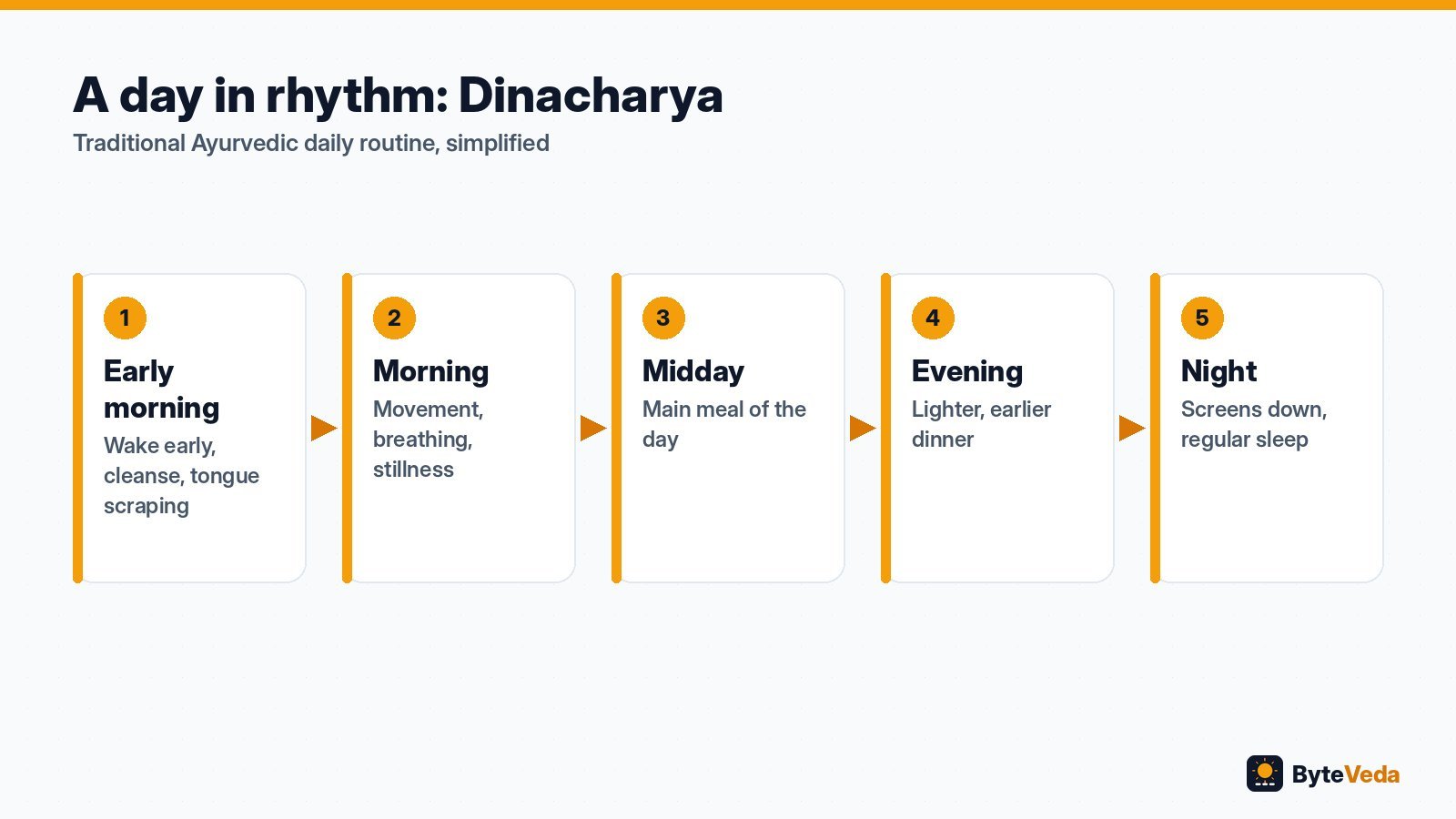
The traditional morning
- Wake early. Ayurvedic texts recommend rising before sunrise, in the period known as brahma muhurta, traditionally considered calm and suited to reflection.
- Cleanse the senses. Washing the face and eyes, cleaning the teeth, and scraping the tongue (jihwa nirlekhana) with a metal scraper are traditional parts of the morning.
- Oil pulling (gandusha). Swishing a spoon of oil — traditionally sesame — in the mouth for a few minutes, then spitting it out.
- Self-massage (abhyanga). Gently massaging the body with warm oil before bathing.
- Movement. Yoga, walking or exercise, traditionally to a moderate level rather than exhaustion.
- Stillness. A few minutes of breathing practice (pranayama) or meditation.
Through the day
- Eat the main meal at midday. Ayurveda traditionally considers digestion strongest around noon, so lunch is the largest meal.
- Eat at regular times, with attention, and avoid constant snacking.
- Keep dinner lighter and earlier, leaving time before sleep.
The evening
- Wind down. Reduce screens and stimulating activity as night approaches.
- Sleep at a regular time. Ayurveda emphasises going to bed early and consistently.
A realistic version for a busy professional
You do not need to do everything. Start with the habits that fit your life:
| Traditional practice | Practical modern version |
|---|---|
| Rising before sunrise | Wake at the same time every day, weekends included |
| Tongue scraping and oral care | Add a tongue scraper to your morning routine |
| Abhyanga (oil massage) | A short self-massage once or twice a week |
| Yoga and pranayama | 10 minutes of stretching and slow breathing |
| Largest meal at midday | Make lunch substantial; avoid a heavy late dinner |
| Early, regular sleep | A screen-free last 30 minutes before bed |
Pro tip
Pick just two habits and keep them for 21 days before adding more. In Ayurveda, consistency is valued more than intensity.
A routine is not a restriction. It is a rhythm that frees the mind from making the same small decisions every day.
A note of care
This article shares traditional Ayurvedic knowledge for general interest. It is not medical advice. Practices such as oil pulling or dietary changes may not suit everyone — if you have a health condition, are pregnant, or take medication, speak with a qualified doctor or a registered Ayurvedic practitioner before making changes.

